国自电气-脉冲分压器专业研发厂商
Language:  ∷
∷ 
∷  ∷
∷ 
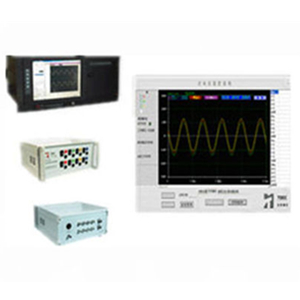
over voltage online monitoring system.The electric system of substations is always susceptible to lightning overvoltage and operational overvoltage. When a substation is located in a thunderstorm area or has many outgoing lines, lightning overvoltage can invade along the lines. Internal overvoltage occurs when the system performs operations such as switching unloaded lines and transformers, and arc overvoltage occurs when the system experiences grounding faults. The magnitudes of these overvoltage impulses are very high (2 to 5 times the system voltage). When the substation protection system is improperly configured or surge arresters are defective, the transient waveform amplitudes of lightning intrusion or operational overvoltage can be quite high, causing harm to primary electric equipment. Moreover, during prolonged operation, insulation levels of electric equipment such as PTs, CTs, and transformers deteriorate due to factors like degradation of insulating oil and aging of paper insulation. Under the influence of high overvoltages, these devices further degrade, leading to equipment defects, insulation breakdown, and even explosion accidents under power frequency conditions. Therefore, these transient overvoltages pose significant hazards to power equipment.
Since the waveforms generated by lightning and operational overvoltages are rapid transient voltage waves with durations ranging from 40μs to 2000μs and frequencies from tens of Hz to hundreds of kHz, the conventional protection recording devices installed in power systems (such as fault recorders) can only obtain overvoltage information from voltage transformers (VTs), recording only power frequency overvoltage information, with poor measurement accuracy and frequency response. Many high-frequency overvoltages cannot be monitored. After equipment is damaged by transient overvoltages, the system lacks relevant recording data, resulting in a lack of accurate judgment basis for equipment damage. In order to achieve correct insulation configuration, prevent damage to power operating equipment from lightning overvoltage, operational overvoltage, and other transient waveforms, or minimize the degree of damage, it is necessary to establish a transient overvoltage response monitoring system. This allows engineers to have clear data on the extent of overvoltage damage to the system, the protection level of surge arresters, the effectiveness of residual voltage, and other related information.
System aliases: transient overvoltage monitoring, substation overvoltage monitoring, lightning overvoltage monitoring
Product Features:
This system provides a series of hardware and software solutions from front-end overvoltage signal conditioners to acquisition servers and clients.
2 to 8 overvoltage signal conditioning channels convert the signals from PTs into voltage signals (not exceeding 5V) that can be collected by the backend data acquisition system.
2 to 8 high-speed synchronous measurement channels, with a maximum sampling frequency of 100K to 20MSps, and an A/D resolution of 12 to 16 bits.
Each channel can cache up to 16M bytes (8M sampling points at 20MSp high-speed sampling) or 256M bytes (128M sampling points at 100KSps low-speed sampling), and can record the normal voltage waveform of the system for 2 power frequency cycles, and the transient overvoltage waveform for 18 power frequency cycles, with a minimum recording time of 0.5 seconds.
Can monitor the occurrence process of overvoltage for each phase at any time, automatically collect and record each overvoltage event, and store it in the hard disk or built-in memory of the acquisition device. Each overvoltage record is automatically assigned a file name, including waveform, recording time, and other data, without manual intervention.
Equipped with comprehensive network communication functions, capable of controlling system operation through remote clients, and downloading on-site acquisition data to remote clients.
The storage capacity of the acquisition device: The data is recorded on the system hard disk, limited only by the remaining space of the hard disk.
Startup conditions: According to user settings, it can adapt to transient overvoltage monitoring of 35kV, 110kV, 220kV, and 330-500kV power systems.
This system is designed with a pre-trigger function (negative delay), allowing observation of the waveform before overvoltage occurs and determining at which phase of the power frequency voltage the waveform starts. To ensure data synchronization, the data acquisition card is set to any channel trigger mechanism. Once any phase has an overvoltage signal, all data acquisition channels start synchronous sampling, ensuring the consistency of each channel phase.
The SPTView transient overvoltage monitoring and analysis system software is embedded with transient overvoltage waveform analysis tools, making it easy for users to identify the type of overvoltage. The SPTView software is dedicated to transient overvoltage monitoring and analysis, supporting Windows XP/Vista/2003/7/10 operating systems, with a graphical and user-friendly control interface. It can run on power systems with various voltage outputs and can complete the monitoring, recording, analysis, and report output of various types of overvoltage.
TEDC API Secondary Development Programming Interface Software Package and Dynamic Link Library: The accompanying TDEC API secondary development programming interface and dynamic link library are written in standard C++ language and run on Windows 2000/XP/Vista/2003/7 operating systems.
They support multiple development platforms, including C++, Borland C++, LabWindows/CVI, LabView, Pascal, and Delphi, for secondary development. The interfaces are clear, simplified, and come with detailed development instructions and examples, enabling users to easily implement secondary development. Hardware Configuration and Key Technical Specifications:
Server: Industrial computer hardware platform, rack-mountable, supporting TCP/IP.
Number of parallel data acquisition channels: 2 to 8 channels. Network data transmission and remote control.
Maximum sampling rate per channel: 100K/20MSps, programmable downward control.
Client: PC or laptop.
Resolution: 12 to 16 bits.
TVR-2001 Overvoltage Signal Conditioner (2 to 8 channels).
Cache depth per channel: 8 to 256M bytes.
Range per channel: ±100mV to ±20V, programmable.
Trigger modes: Internal trigger, external trigger, manual trigger, supporting multiple modes.
QQ: WhatsAPP&Twitter&Facebook:+1 7134804748
手机:+86 13349886706 Same as WeChat
电话: +86 027 81739173
邮箱: gozchina@163.com
地址:China Wuhan East Lake hi tech Development Zone (Optics Valley of China)